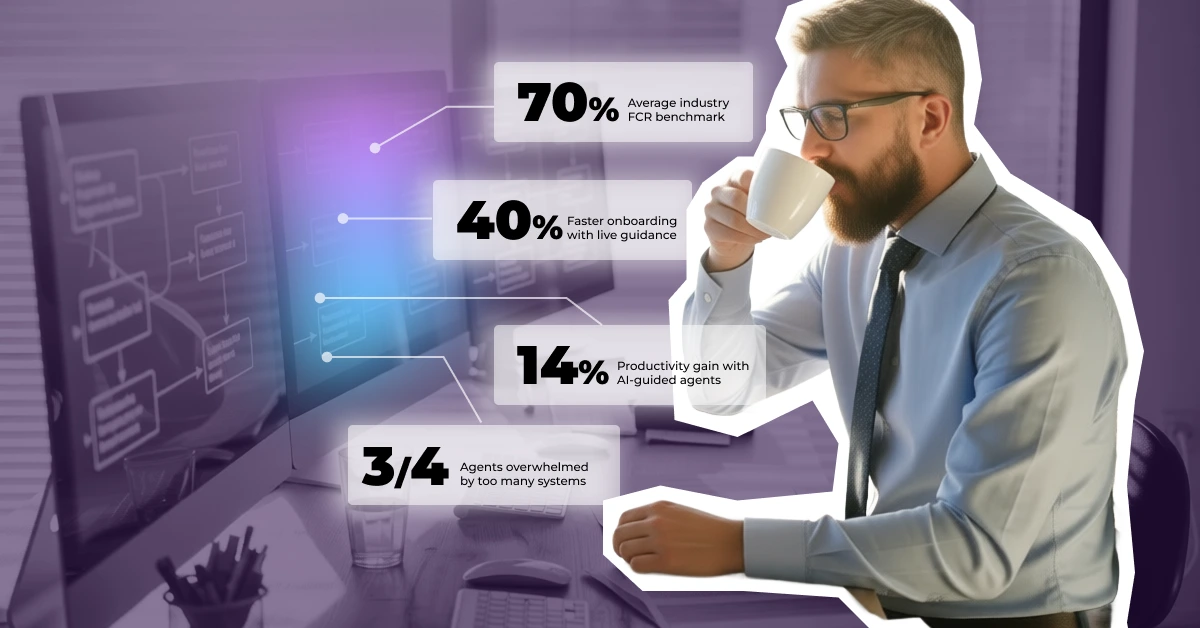

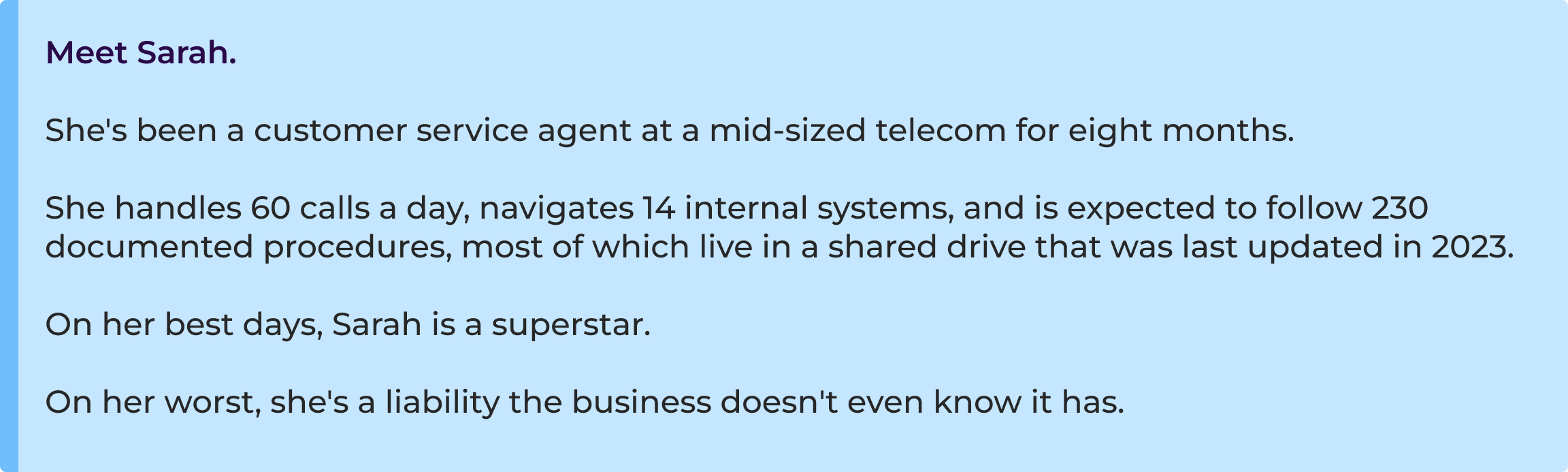
Sarah's story isn't an outlier. A 2024 Deloitte survey found that three out of four agents are overwhelmed by too many systems and too much information, causing longer calls and weaker outcomes. They're expected to recall branching logic across hundreds of procedures while simultaneously managing live customer interactions. The cognitive load is enormous, and the consequences of errors range from failed compliance to churn-inducing experiences.
Yet most organizations respond to this challenge the same way they always have: more training, longer onboarding, thicker binders. And then they wonder why performance remains uneven, and why the gap between their best agents and worst agents never seems to close.
The leaders changing this aren't doing it with more training. They're doing it with product insights: the real-time data generated by how their teams use (or don't use) documented processes. And they're using platforms like Procedureflow to turn that data into frontline execution improvements that compound over time.
The Problem
The Execution Gap No One Is Measuring
Most operations leaders would tell you their processes are documented. What they can't tell you is whether those processes are being followed, or how.
Traditional knowledge management tools are built for authors, not analysts. They measure page views and completion rates. They tell you a procedure was opened. They don't tell you where agents got confused, which steps triggered escalations, or why two agents in the same seat can produce wildly different outcomes from the same workflow.
This is the execution gap: the silent distance between what a procedure says should happen and what happens at the moment of contact. It's invisible on your standard KPI dashboard. But it's felt everywhere: in your AHT variance, your QA scores, your repeat contact rate, and your CSAT volatility. According to SQM Group's 2025 research, the average FCR rate across all call center industries sits at just 70%, meaning nearly one in three customer contacts still fails to resolve the first attempt.
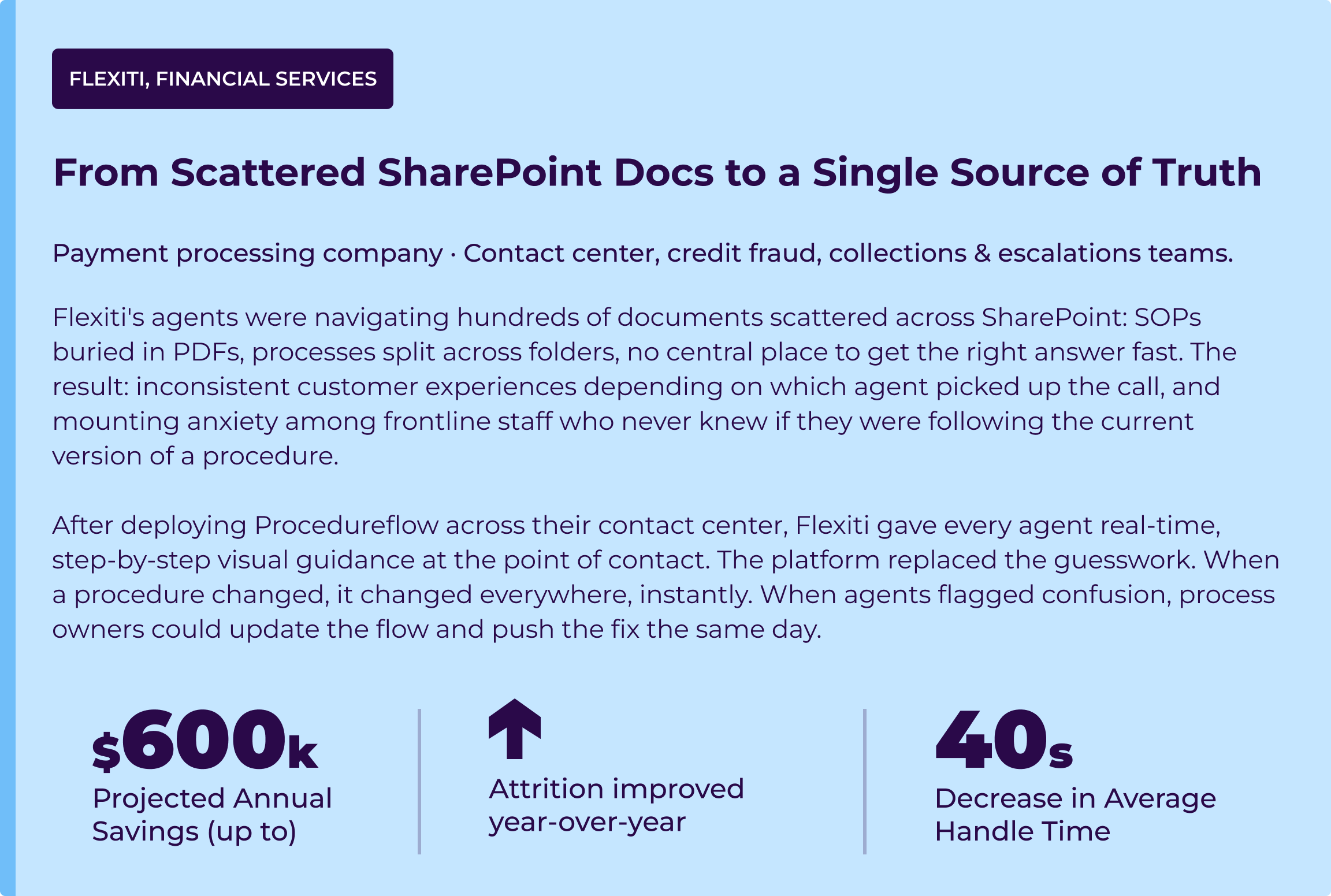
“Implementing Procedureflow has made our agents’ lives easier by creating consistency and removing the intimidation and guesswork around our processes. Agent satisfaction is the highest it’s ever been in our contact center and customers benefit from a better, more consistent customer experience.”
Ryan Janicki, VP of Operations, Flexiti
Industry Context
What the Best Operations Teams Know That Others Don't
Over the past five years, a category of high-performing operations teams has quietly separated itself from the pack. They don't just have documented processes; they have living processes that evolve based on usage data. They treat their procedure library the same way their product team treats software: with build-measure-learn cycles, version control, and user behavior analytics.
McKinsey's research on next-generation operational excellence identifies this behavioral shift as one of the single greatest differentiators between top-quartile and bottom-quartile service organizations. Their analysis found that companies embracing this approach achieved outcomes including 30% increase in labor productivity, 25% improvement in employee retention, and 20% decrease in operating costs.They describe the capability as process observability: the organizational ability to see, in real time, where process adherence is strong, where it's breaking down, and what business impact that creates.
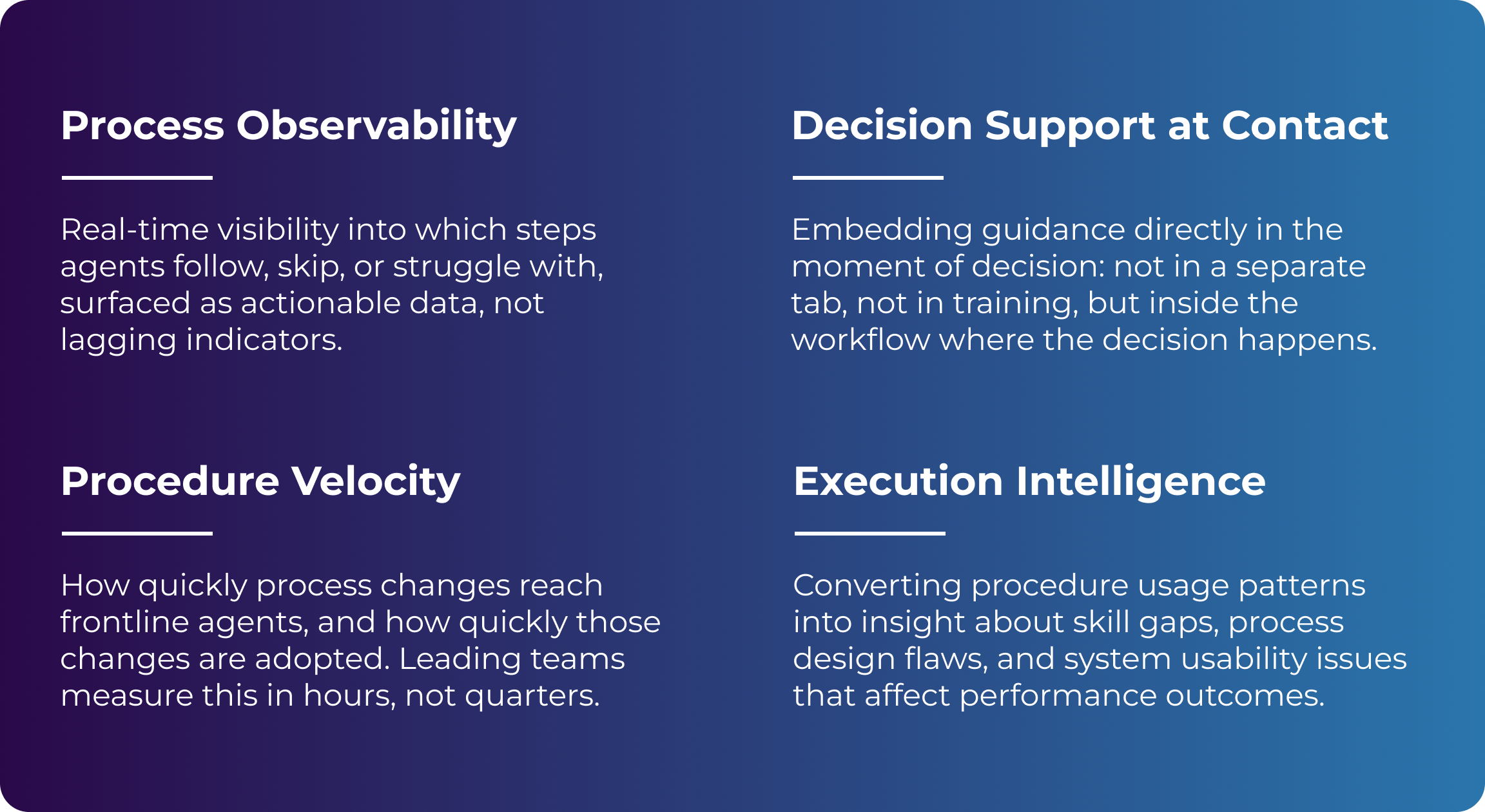
These capabilities are no longer the exclusive domain of enterprise operations with 100-person process excellence teams. Platforms like Procedureflow have democratized them, putting procedure analytics and real-time agent guidance within reach of teams of any size. And the data is moving fast: organizations using Gen AI–enabled customer service agents are already seeing a 14% increase in issue resolution per hour and a 9% reduction in average handle time, according to McKinsey.
Procedureflow in Practice
From Static SOPs to a Living Execution Engine
Procedureflow was built around a simple but powerful premise: the best procedure isn't the most detailed one: it's the one agent use, in the moment, consistently.
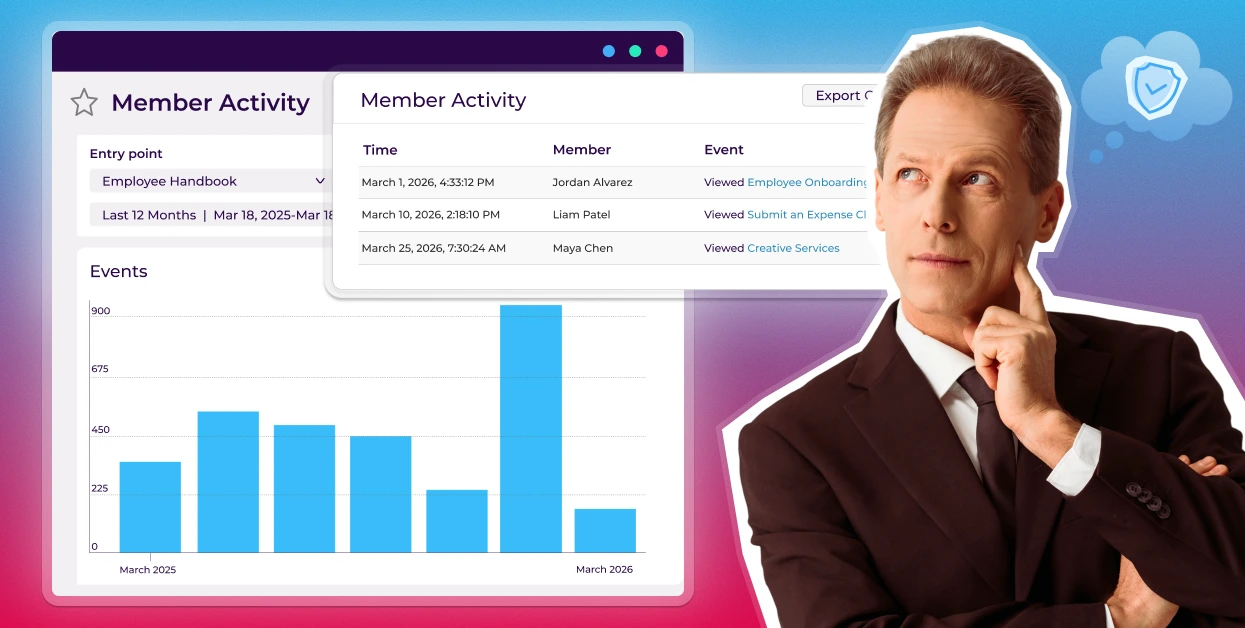
At its core, Procedureflow transforms static documentation into dynamic, visual, step-by-step workflows that agents can follow in real time during customer interactions. But the platform's real power is what happens on the back end: every interaction with a procedure generates data. Which step was accessed. How long did the agent spend there. Where they dropped off. What came next in the conversation. Over time, this creates a rich behavioral dataset that operations leaders can use to continuously improve both their processes and their people.
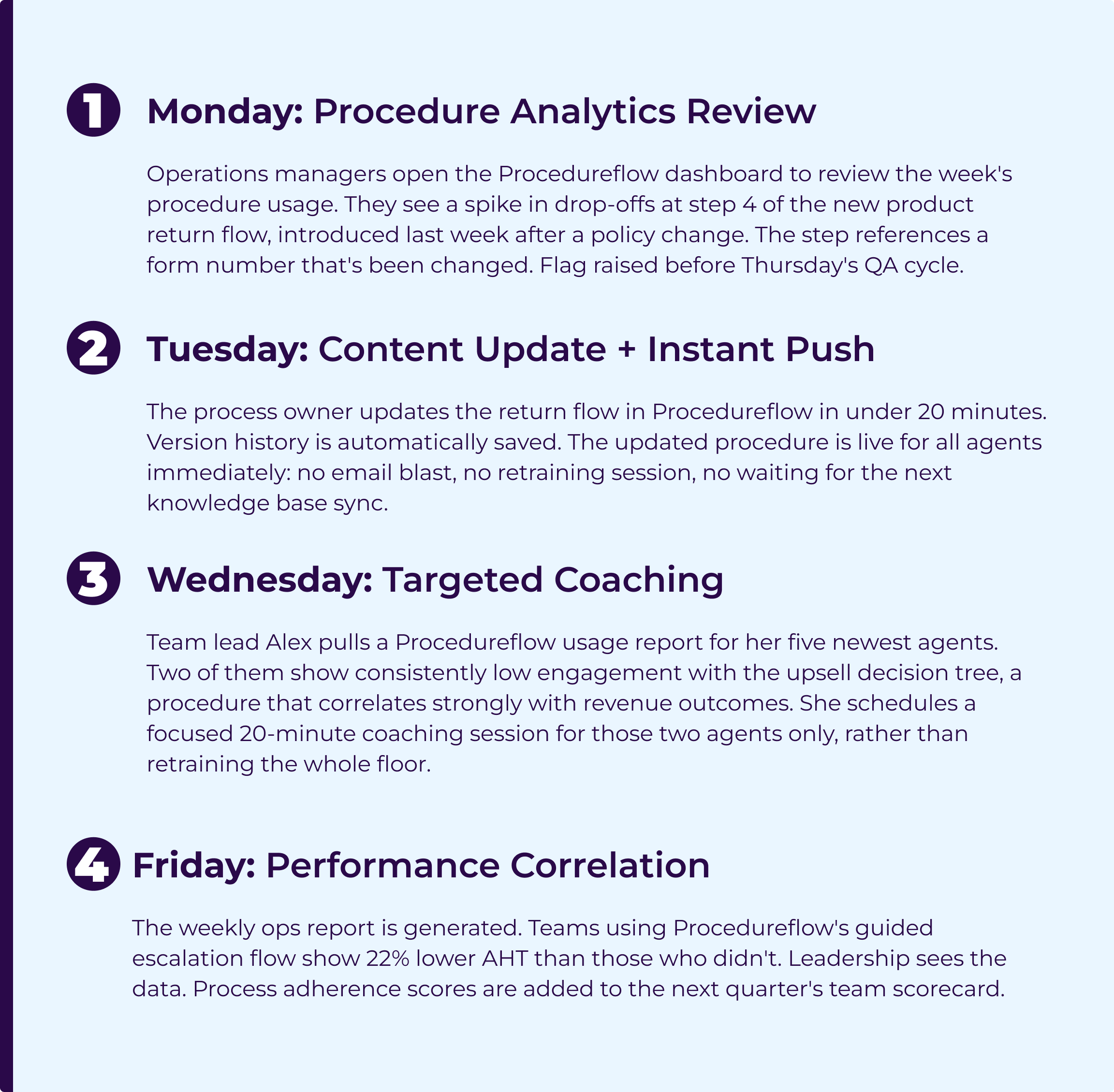
How a Typical Week Looks with Procedureflow
“We attained a 50% reduction in training time by accelerating the onboarding process and enabling agents to start assisting customers as soon as possible.”
Ashley Salter, SVP Digital Experience Center, Brooks Running
Integrations
Where Procedureflow Fits in Your Stack
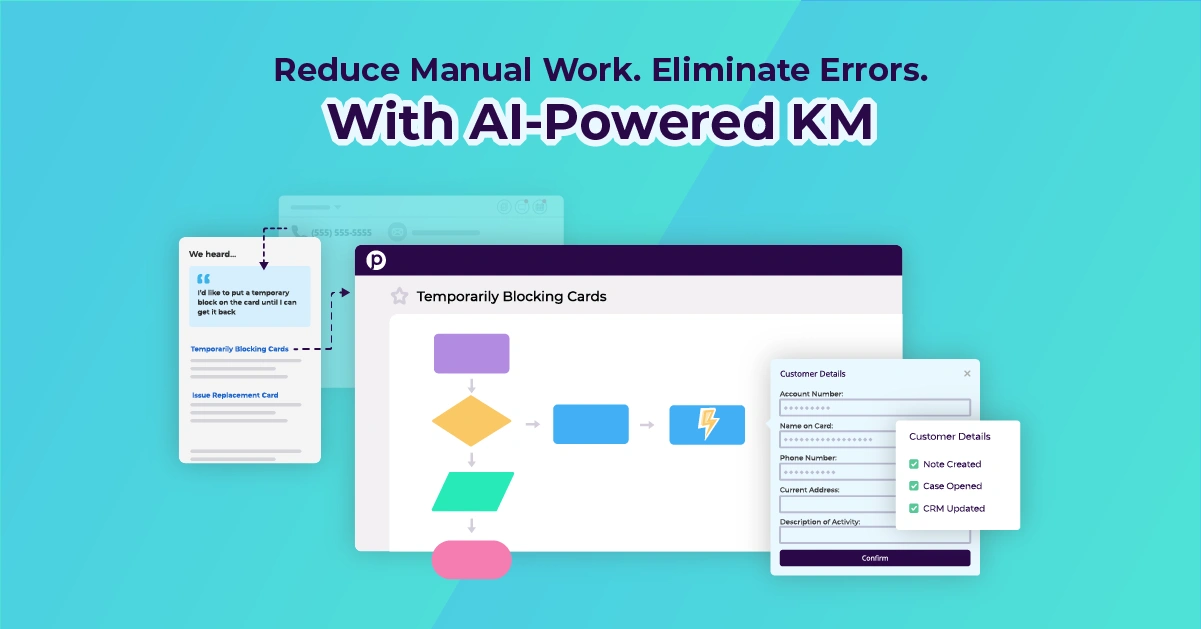
One of the most common objections to adopting a new operations tool is integration anxiety: "We already have five platforms. We don't need a sixth." Procedureflow was designed to address this head-on. Rather than replacing your existing systems, it acts as a connective tissue layer, embedding guidance and capturing usage data inside the tools your agents already live in.
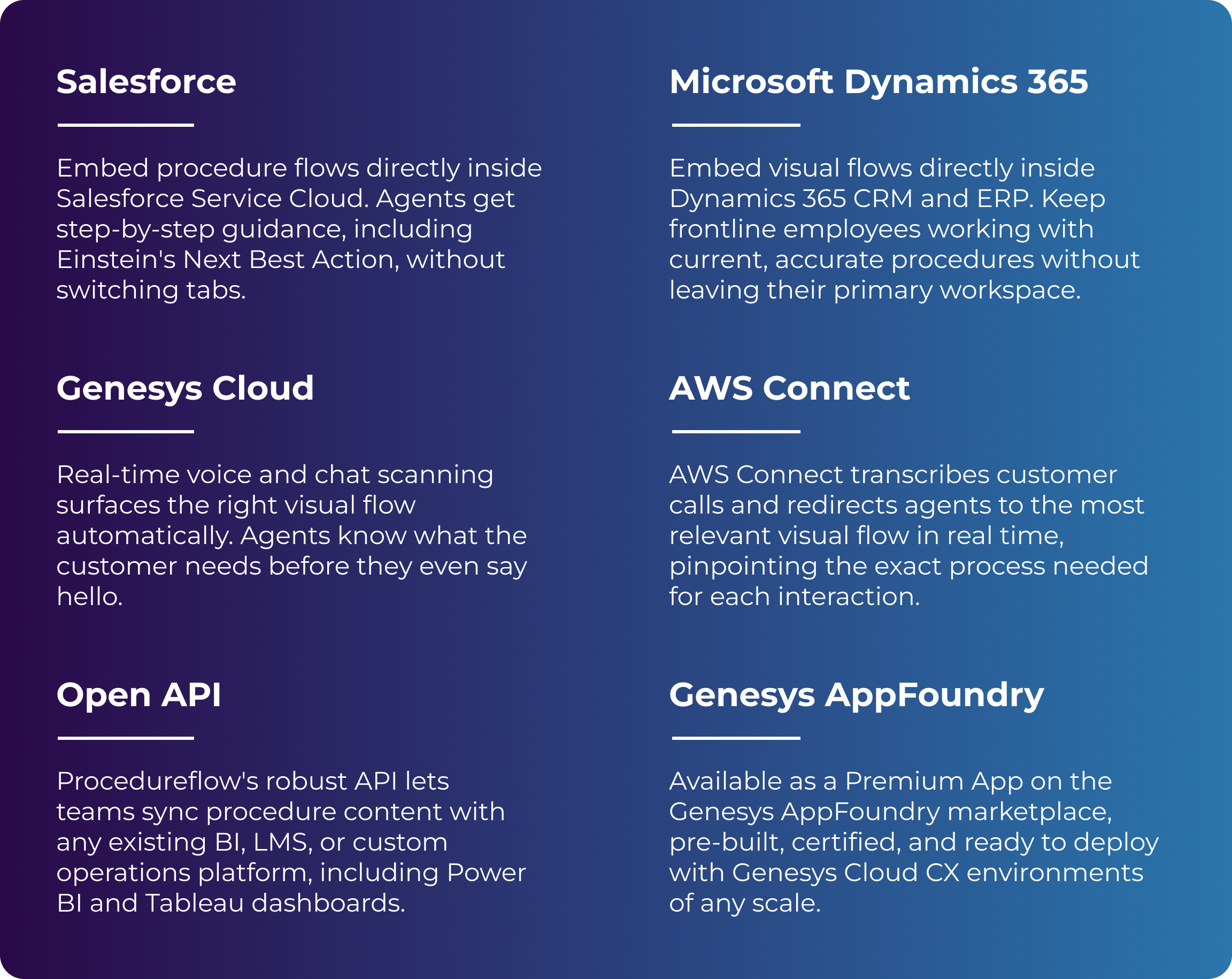
The integration story matters beyond convenience. When Procedureflow lives inside Salesforce or Genesys, usage data becomes far richer, because it's captured in context. You don't just know that an agent used a procedure; you know which customer interaction prompted it, how it influenced the outcome, and whether the procedure guidance aligned with what your CRM captured as the resolution. That's a level of process intelligence most organizations have never had access to before.
The Business Case
What Leading Teams Actually Measure and What They Find
Process visibility without business impact is just activity metrics. The organizations getting the most from Procedureflow have been deliberate about connecting procedure analytics to outcomes that move the business. The industry context is telling current AHT benchmarks sit at around 6 minutes and 10 seconds industry-wide, and agent attrition averaged 52% annually in 2023, making fast, consistent knowledge transfer a survival issue, not just a performance one. Here's what the data consistently shows:
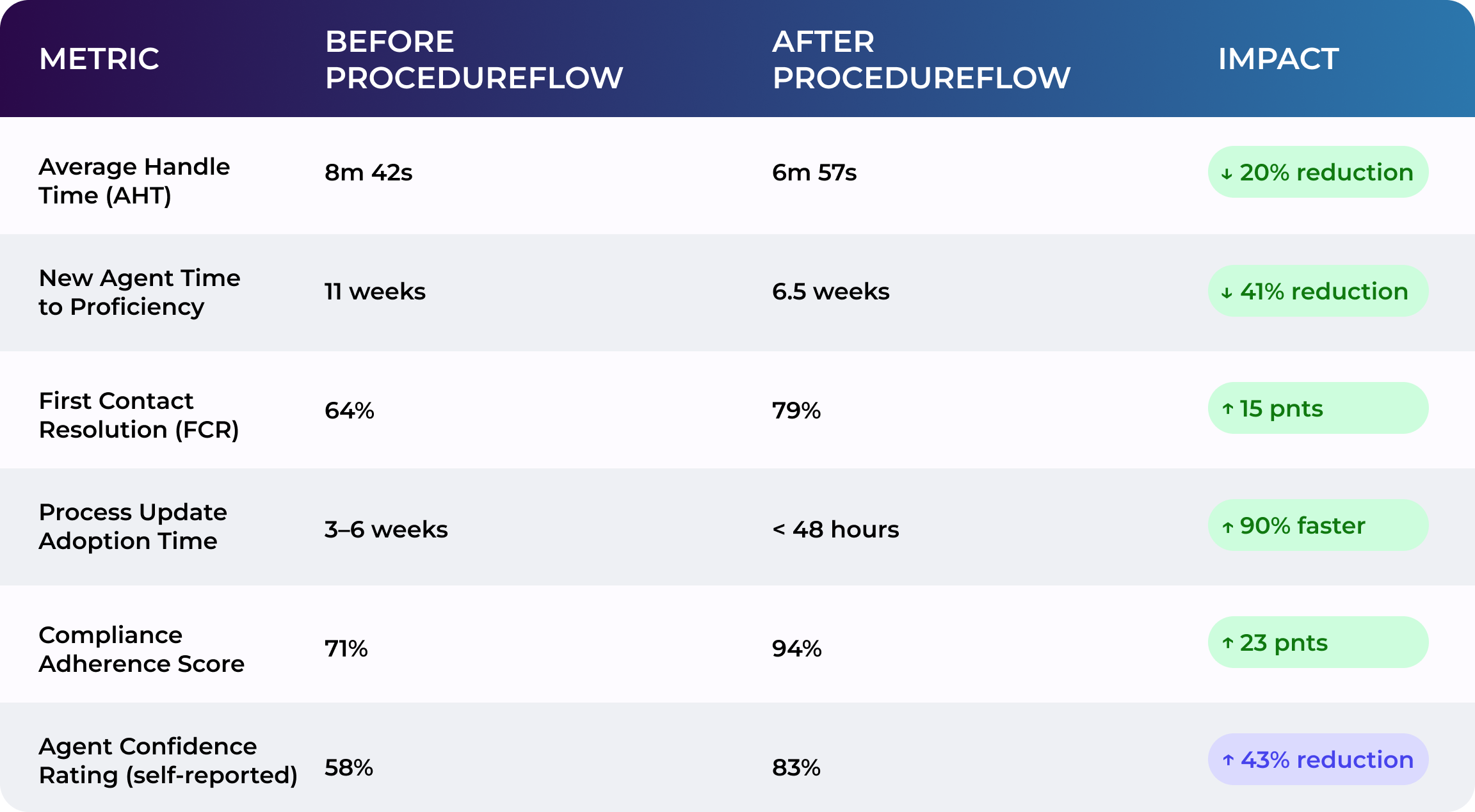
These aren't outlier numbers. They aggregate benchmarks from Procedureflow customers across contact centers, financial services, insurance, and healthcare verticals. The throughline is consistent: when agents have the right procedure at their fingertips, embedded in their native workflow, and updated in real time, execution quality improves dramatically, and so does the experience of being an agent.
The Strategic Picture
Why This Isn't Just an Operations Win
There's a temptation to categorize Procedureflow as a contact center tool, or a training aid, or a knowledge management solution. The most forward-thinking executives are seeing it as something bigger: a strategic lever for organizational agility.
Think about what it means to change a policy on Monday and have every frontline employee executing that new policy correctly by Tuesday. Think about what it means to launch a new product and deploy the supporting procedures to 1,200 agents simultaneously, with real-time visibility into who's adopted them and who needs a nudge. McKinsey's research confirms this directly: companies that follow operational excellence principles to guide technology adoption, rather than deploying technology for its own sake, consistently achieve more impact.
“As a centralized hub for all our processes, Procedureflow is the only way we can operate. It works for any 'if this, then that' process scenario, and we found value in using Procedureflow in areas outside our contact center, including back-office and application processing.”
Meredythe Miles, SVP Digital Experience Center, Nymbus
Getting Started
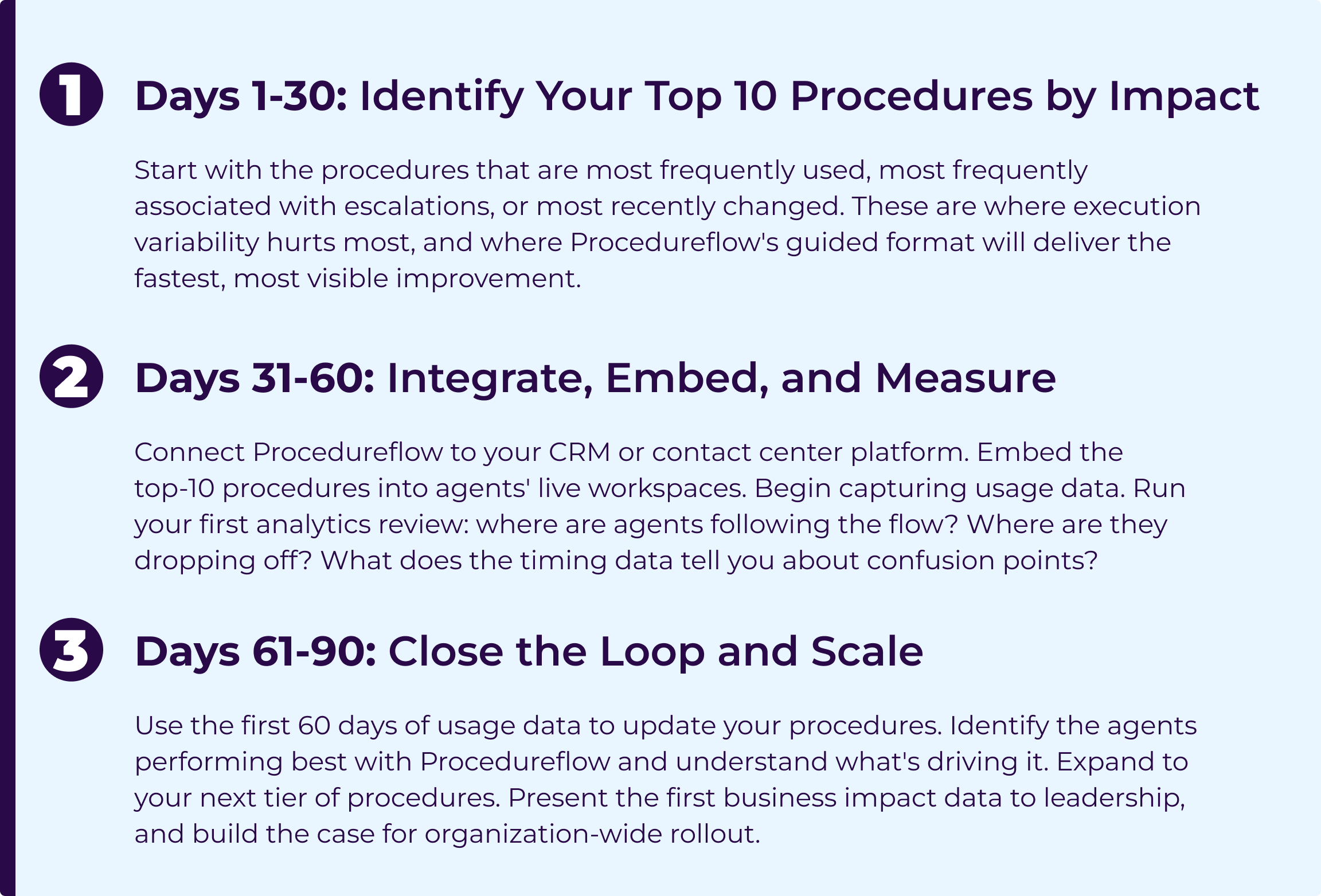
A Practical Framework for Your First 90 Days
The teams that get the most from Procedureflow follow a simple three-phase approach. It's not about boiling the ocean: it's about finding your highest-impact procedure clusters and building momentum from there.