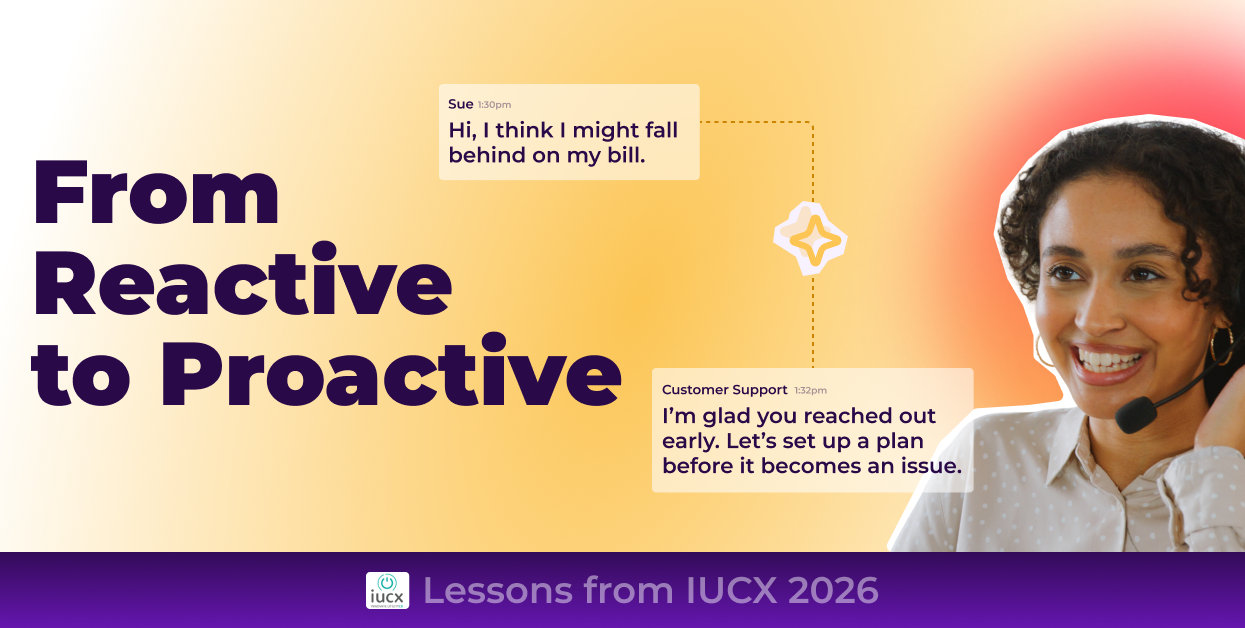
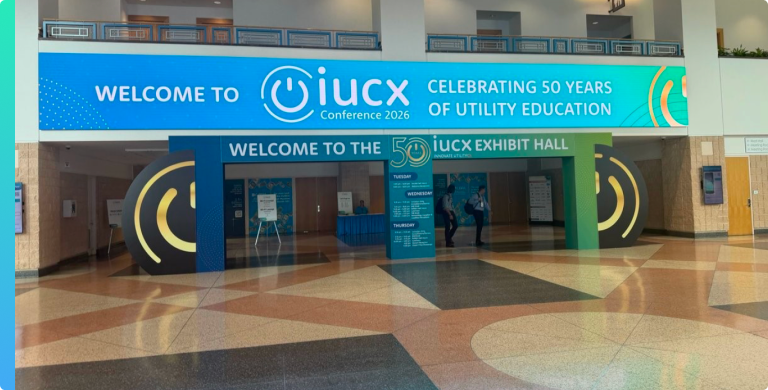
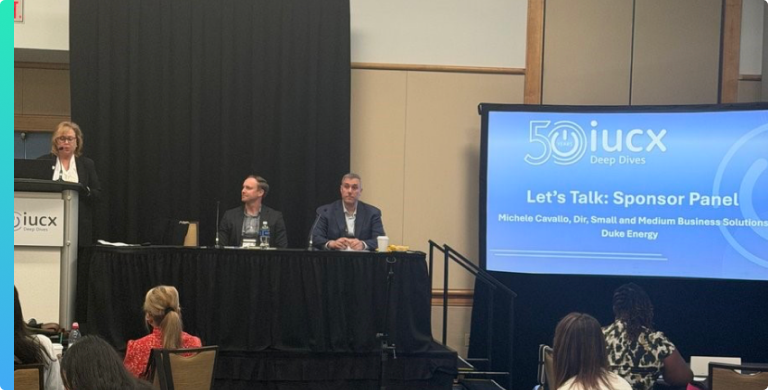
On April 14, 2026, Procedureflow joined utility industry leaders at the IUCX Conference 2026, celebrating 50 years of utility education, for the Customer Assistance Deep Dive Sponsor Panel. Representing Procedureflow on the panel was Jamie Morell, VP of Customer Solutions, whose work helping utilities build governed knowledge foundations made him the ideal voice on the session’s central theme: From Reactive Service to Intelligent, Proactive Customer Care. The session convened operations, customer experience, and technology leaders to address the most consequential challenges in utility customer operations today: AI readiness, LIHEAP funding pressure, agentic AI in utilities, and the foundational knowledge gaps that are silently undermining all of the above.
The Starting Point Is Not a Technology Overhaul
One of the clearest signals from the panel: utilities successfully deploying AI in utilities customer service did not begin with a platform overhaul or a CIS modernization project. They identified their highest-volume, most repeatable call types: establishing service, processing a disconnect, configuring a payment arrangement, and deployed guided procedures for utilities to handle those interactions first. As Jamie Morell put it on the panel, the goal is not the most sophisticated utility customer service AI. It is the most consistently executed one.
| Step | Action | Why It Works |
|---|---|---|
| 1 | AI-guided IVR for instant call routing | Eliminates complex menu trees and abandoned calls |
| 2 | Guided procedures for every call type: visual, step-by-step | Reduces handle time and eliminates advisor guesswork |
| 3 | Plan for the full call spectrum from day one: outages, disaster response, meter management, assistance eligibility | Not only routine transactions |
| 4 | Build escalation paths for vulnerable customers into the procedure itself | Protection built in before go-live, not bolted on after |
The utilities producing measurable outcomes proved the model on two or three call types and then scaled. That implementation discipline is precisely what distinguishes a successful AI deployment from an expensive, underdeveloped pilot.
Vulnerable Customers Require Operational Design: Not Good Intentions
Serving elderly, low-income, and non-English-speaking households with consistency is not a values statement. It is an operational design requirement. Vulnerable customers are the most likely to disengage when the process is confusing, slow, or makes them feel judged, and the most harmed when they do.
| Design Requirement | What It Means in Practice |
|---|---|
| One unified eligibility screener | A single guided flow covering LIHEAP, utility assistance, and payment plans, eliminating mid-call checklist juggling and improves enrollment conversion |
| Warm transfer: not referral | Customers handed a phone number rarely call it. Staying on the line and connecting directly to a partner agency is the single highest-impact change for enrollment rates |
| Language & accessibility | Multilingual call flows and AI-assisted telephony routing reduce friction for non-English-speaking customers from the first touchpoint |
| Instant escalation: always | No vulnerable customer should feel trapped in automation. A live, informed representative must be reachable instantly, with full call context already visible on screen |
“NB Power eliminated 7,000 mentor assist calls and saved 11,500 hours annually, with zero loss in service quality across even their most complex customer scenarios.”
Read the full story: NB Power

The Foundation Problem: Why AI Keeps Underdelivering
The most candid conversation of the panel addressed why AI keeps falling short in utility customer operations, and the technology is rarely the cause.
Utilities deploy the latest model. It handles routine calls competently. Then a disconnect moratorium is issued on a Friday evening, a new LIHEAP rule goes into effect, or an assistance program launches with 48 hours’ notice, and the AI is confidently delivering incorrect information to distressed customers at the worst possible moment.
Three foundational gaps are holding the industry back, and what Procedureflow closes:
| Gap | The Problem | The Cost |
|---|---|---|
| Knowledge fragmentation | Procedures across too many locations with no single owner, and no one can confirm which version is current | AI gives inconsistent answers and erodes customer trust with every interaction |
| Process inconsistency | No guarantee two advisors handling identical call types follow the same steps | Inconsistency gets encoded into model behavior and scaled at volume |
| Governance gaps | No reliable mechanism to push regulatory updates to every advisor simultaneously | Compliance liability on its own, and a crisis when a regulator asks for evidence |
The Core Insight
AI cannot be smarter than the knowledge it is built on. The root cause is not the model. It is that most utilities have their procedural knowledge scattered across PDFs, SharePoint folders, tribal expertise in senior advisors’ heads, and compliance manuals that no one has updated in months.
| Industry Data Point | Stat | Source |
|---|---|---|
| Utilities implementing or analyzing AI | 74% | IBM Global AI Adoption Index 2023 |
| Organizations actually scaling agentic AI | 23% | McKinsey State of AI 2025 |
| Average annual cost of poor data quality | $12.9M avg. | Gartner Data Quality Research |
| AI projects abandoned without AI-ready data (through 2026) | 60% | Gartner, Feb 2025 |
| Utility executives saying AI requires a trust foundation first | 74% | Accenture Tech Vision 2025 |
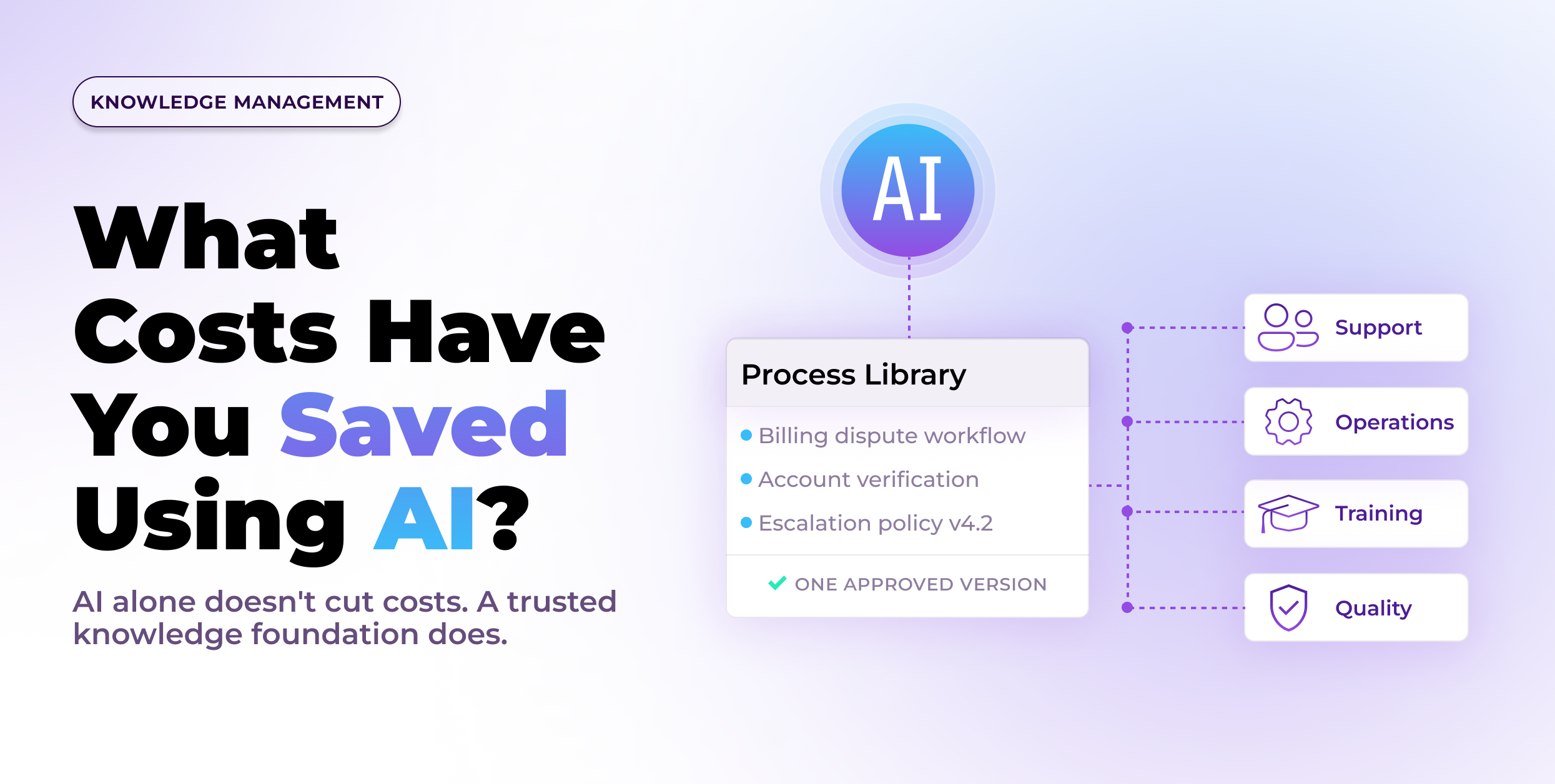
The solution is a governed knowledge management layer for utilities that acts as a contact center knowledge base, one accurate, live, auditable source of truth connected to every channel and every team. Whether a call arrives through IVR, a live agent, an outsourced partner, or a seasonal hire on their second week, the same accurate guided procedure executes every time.
Compliance at Speed: Ending the Trade-Off
In a regulated utility environment, compliance and speed have historically been in direct tension. Utility compliance automation: the ability to convert a new regulation directly into a live guided procedure in minutes. This is precisely what eliminates that trade-off. The answer is not moving faster or hiring more people. It is building the process infrastructure that makes both possible simultaneously.
| Capability | What It Does | The Impact |
|---|---|---|
| AI Process Designer | Paste policy text → instant structured procedure, ready to review and deploy | Days of manual mapping become minutes |
| AI Search | Plain-language procedure search during live calls, with no memorization required | Right answer surfaces in seconds, every time |
| Power Shapes | Automates eligibility checks, ticket creation, account updates without platform switching | Right action fires at the right step, with no manual intervention |
| Full Audit Trail | Every change tracked, every approval logged, every advisor notified in real time | When a regulator asks, the answer is a report, not a scramble |
“TruMark Financial achieved an 80% reduction in compliance audit time after implementing Procedureflow. Across 120+ organizations globally, compliance stops being the function that slows operations down and becomes the function you can always prove, on demand, to any regulator.”
Where AI Is Ready: and Where the Industry Is Overestimating
The panel offered a direct and data-grounded assessment of where AI in utilities is delivering, and where ambition is outpacing foundation.
| ✅ Where AI Is Ready Today | ⚠️ Where Expectations Outpace Reality | |
|---|---|---|
| Use cases | Call routing and IVR automation, real-time agent guidance, structured transactions, eligibility screening, cross-training acceleration | Fully autonomous agentic AI across all call types without a governed knowledge foundation |
| What’s proven | Top-performing utilities are 82% more likely to use AI to resolve issues faster (Accenture) | Only 23% of organizations are actually scaling agentic AI McKinsey, 2025 |
| Common mistake | - | Assuming AI will self-correct when governance is absent; skipping the knowledge foundation in favor of model selection |
| What’s needed | Guided procedures + AI routing | Trust-first foundation: live knowledge, governance, full audit trail |
Measuring Outcomes: Not Activity
Most utilities are measuring inputs: calls handled, referrals made, IVR completions. These metrics describe activity. They say almost nothing about whether eligible customers received assistance, whether procedures are being followed correctly, or whether investments in AI in utilities customer service are producing real value.
| Metric | What It Reveals |
|---|---|
| Enrollment conversion rate | What % of screened-eligible customers actually enrolled: the single most important outcome metric |
| Recidivism rate (60-day) | How many customers are calling back in financial distress within 60 days, indicating unresolved need |
| Process adoption visibility | Which flows are being used, where advisors spend the most time, which procedures have unreviewed updates |
| Average Handle Time (AHT) | A sustained AHT decrease signals advisors are finding correct information faster. Use the ROI Calculator to quantify value |
| Crowdsourced update velocity | How quickly frontline-submitted process improvements move through manager review and reach every advisor |
📊 THE OPERATIONALIZATION GAP
Only 25% of contact centers have successfully operationalized their knowledge and AI tools into daily workflows (AmplifAI, 2025). The other 75% have the technology investment, but not the process discipline to make it deliver. That gap is where eligible customers keep falling through.
Ready to Build the Foundation? The utilities capturing the AI opportunity are not the ones moving fastest. They are the ones who built the right knowledge foundation first.
Take the Free 5-Minute Knowledge Assessment
Book a Demo with the Procedureflow Team
Explore Guided Knowledge for Utilities