Nobody sets out to run their organization on outdated information. It happens gradually. A policy changes and three processes do not get updated. A system migrates, and the documentation lags behind by a month. A compliance requirement shifts, and the process sits in someone's drafts folder, waiting for approval that never quite arrives.
Each gap, on its own, seems manageable. Together, they become something else entirely. The knowledge your teams rely on is only as useful as it is accurate. When it drifts, everything built on top of it drifts too.
What is knowledge base governance and why does it matter?
Knowledge base governance is the practice of managing the accuracy, freshness, and reliability of the process knowledge your teams and AI agents operate from. It means clear ownership of who maintains each process, a defined rhythm for reviewing and updating content, and visibility into which processes are current and which are not.
Most organizations have a knowledge base. Far fewer have governance around it. Where both human teams and AI agents rely on the same process knowledge to serve customers and handle high-stakes interactions, governance is not optional. It is the foundation everything else stands on.
What does poor knowledge quality actually cost?
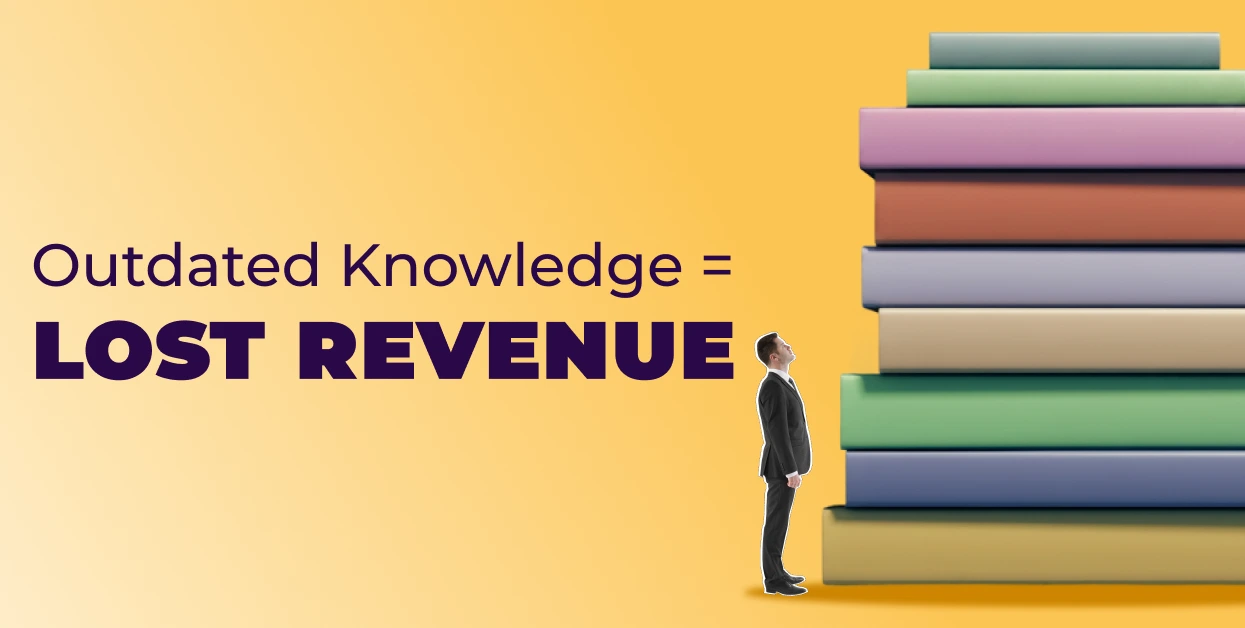
Ask an operations leader what their biggest risks are, and you will hear about staffing, productivity, escalation rates, and customer satisfaction. Rarely will you hear about knowledge quality. Yet Gartner research puts the average annual cost of poor data quality at $12.9 million per organization. That figure is the aggregated cost of decisions made on bad information: wrong answers given, wrong processes followed, wrong guidance delivered with complete confidence.
What it does to your teams
Knowledge quality is invisible when it is good. When it is poor, your people don't feel it immediately. They feel it when they escalate situations not because they are genuinely complex, but because they do not trust the guidance in front of them. According to CAKE.com's 2025 Knowledge Management research 62% of agents say the materials they use are outdated. More than half. In most organizations, that are not statistic. It is a daily experience teams have quietly learned to work around.
The workarounds have their own cost. Longer handle times. More escalations. Reliance on tribal knowledge that lives in the heads of experienced team members and nowhere else.
Team confidence is a direct driver of the speed, accuracy, and consistency of every interaction your organization handles.
Take 30 seconds to evaluate
| Question | Yes | In Progress | Not Yet |
|---|---|---|---|
| Your team asks a colleague before they check the knowledge base | ☐ | ☐ | ☐ |
| New hires are still "figuring things out" months after onboarding | ☐ | ☐ | ☐ |
| Two customers called about the same issue and got two different answers | ☐ | ☐ | ☐ |
| Nobody can say with confidence when a specific process was last reviewed | ☐ | ☐ | ☐ |
| The last content audit was scheduled, rescheduled, and never quite finished | ☐ | ☐ | ☐ |
Score Legend:
- 0 out of 5? Your knowledge base is in great shape. Genuinely rare.
- 1 to 2? Early signals worth paying attention to before they compound.
- 3 or more? Stale knowledge is already costing you. The question is how much.
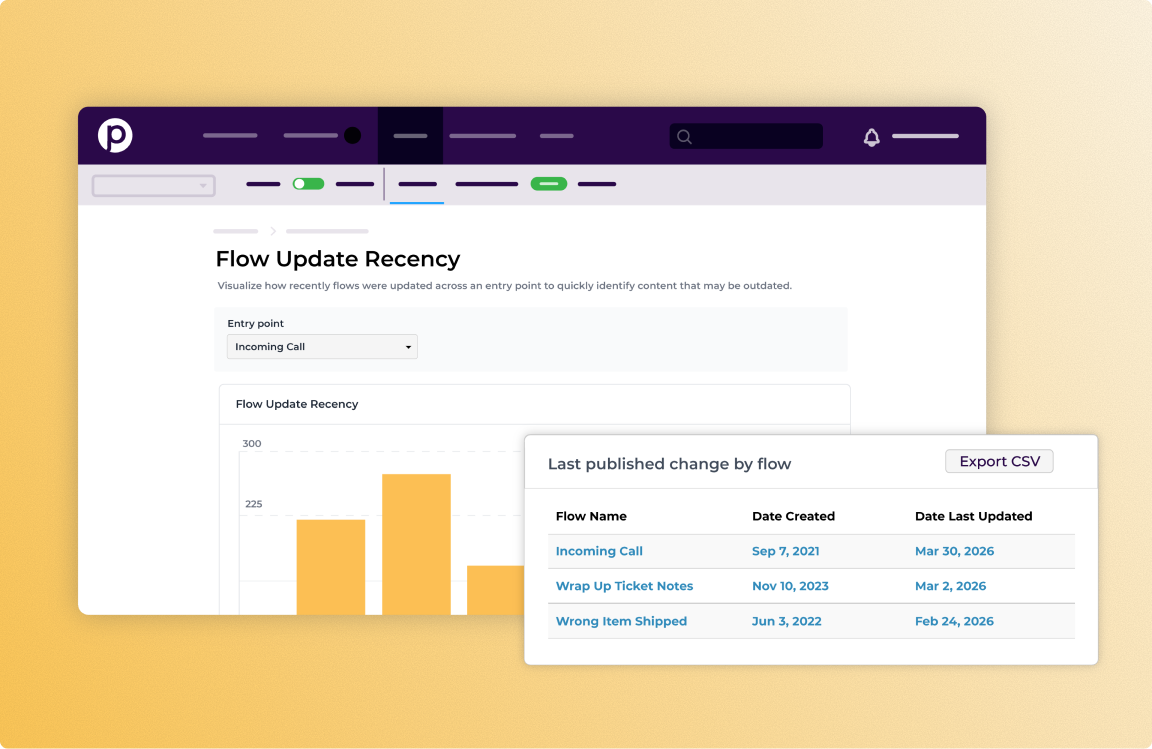
Flow Update Recency is now live in Procedureflow Give your knowledge managers a live view of when every process flow was last updated.
No setup. No spreadsheets. Always current.
Book a demo | Learn more about Flow Update Recency
What it does to your customers
Customers do not experience your knowledge base. They experience the output of it. When that output is inconsistent, what erodes is trust. Not all at once, but steadily. Research from PwC found that 32% of customers will walk away from a brand they love after just one bad experience. These are not technological failures. They are knowledge failures. And they are almost entirely preventable.
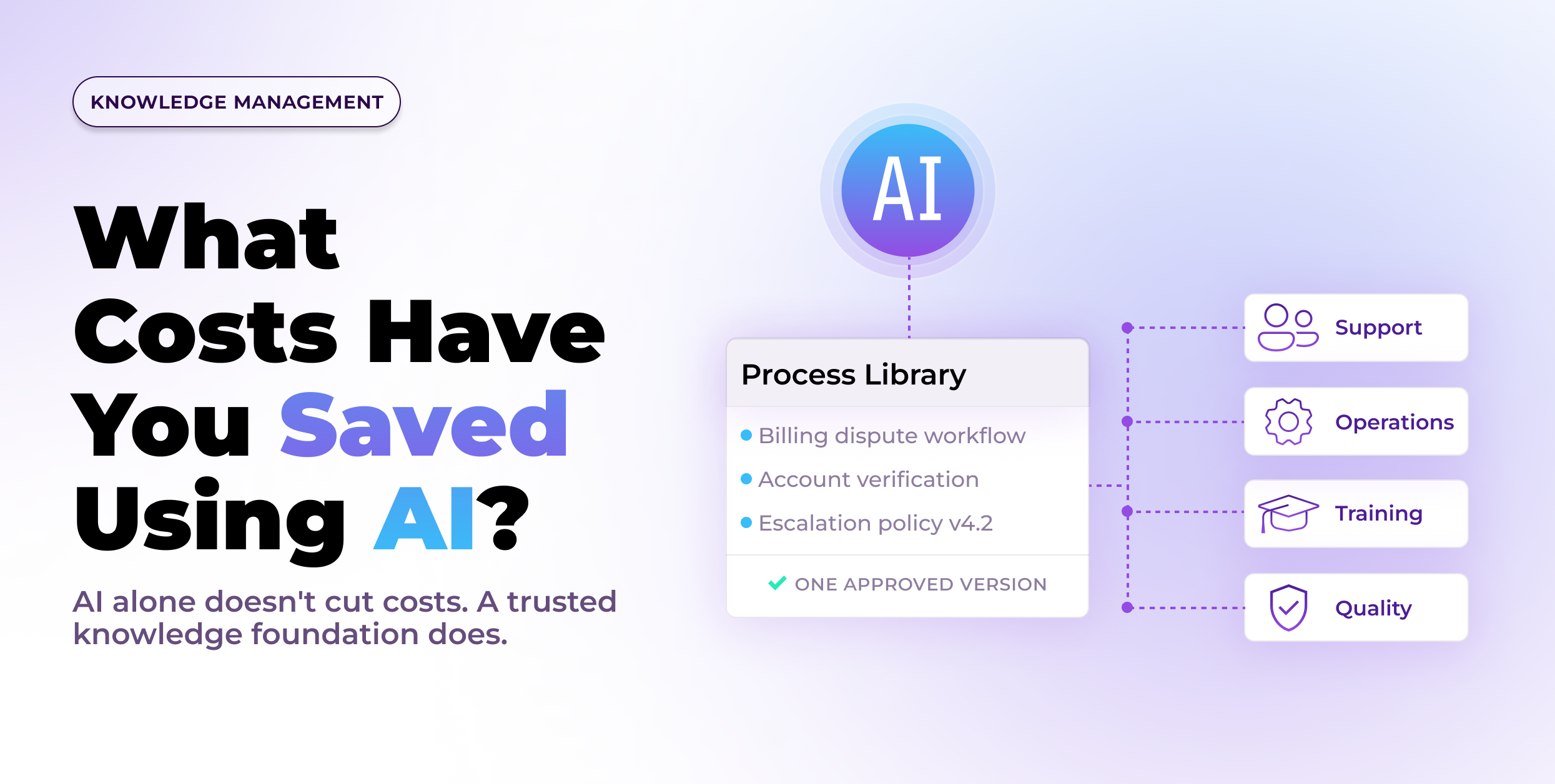
What it does to your AI
AI agents do not improvise. They do not ask a colleague when something feels off. They follow the knowledge they are given, precisely, at scale, every time. When that knowledge is stale, the AI does not deliver one wrong answer. It delivers the same wrong answer to every person it touches until someone catches it. Precisely's 2024 Data Governance Adoption Report found that 62% of organizations cite data governance as their top challenge when deploying AI. Not the model, not the integration, not user adoption. The knowledge governance.
An AI running on outdated process knowledge is not a productivity tool. It is a liability operating at a productivity scale.
One problem. Four places it shows up.
|
Your teams feel it first Longer handle times. More escalations. Workarounds that quietly become the unofficial process. New hires who cannot reach proficiency because what is documented does not match reality. |
Your customers feel it next Inconsistent answers. Wrong information delivered confidently. The slow erosion of trust that does not show up in one ticket. It shows up in churn three months later. |
|
Your AI amplifies it A human agent makes one wrong call. An AI agent makes the same wrong call thousands of times before anyone notices. Scale does not fix the problem. It multiplies it. |
Your organization absorbs it silently No single moment of failure. Just a persistent invisible drag on performance, compliance, and confidence, until something forces the question: when did we last check this? |
Why the problem persists
The honest answer is visibility. Most teams do not have a reliable way to see which processes are current and which are not. They rely on periodic audits that are outdated before they are finished. They rely on manual spreadsheets that are only as current as the last time someone had time to update them. The gap is infrastructure.
Treating knowledge freshness as an operational priority
The organizations getting this right treat content freshness the same way they treat any other operational metric: with visibility, clear ownership, and a regular rhythm of review and action. They know which flows have not been touched in over a year. They know which processes need to be reviewed before a system rollout. This applies whether you run a contact center, a financial services operation, a healthcare network, an insurance firm, or any organization where people and AI agents rely on process knowledge to do their jobs well.
That is exactly why we built Flow Update Recency, now live in Procedureflow. It gives knowledge managers across every industry a live view of when every process flow was last updated, so content freshness stops being something you discover in hindsight and starts being something you manage every day.
Because the cost of stale knowledge does not wait for your next audit to show up.